Introduction – Yana Caves
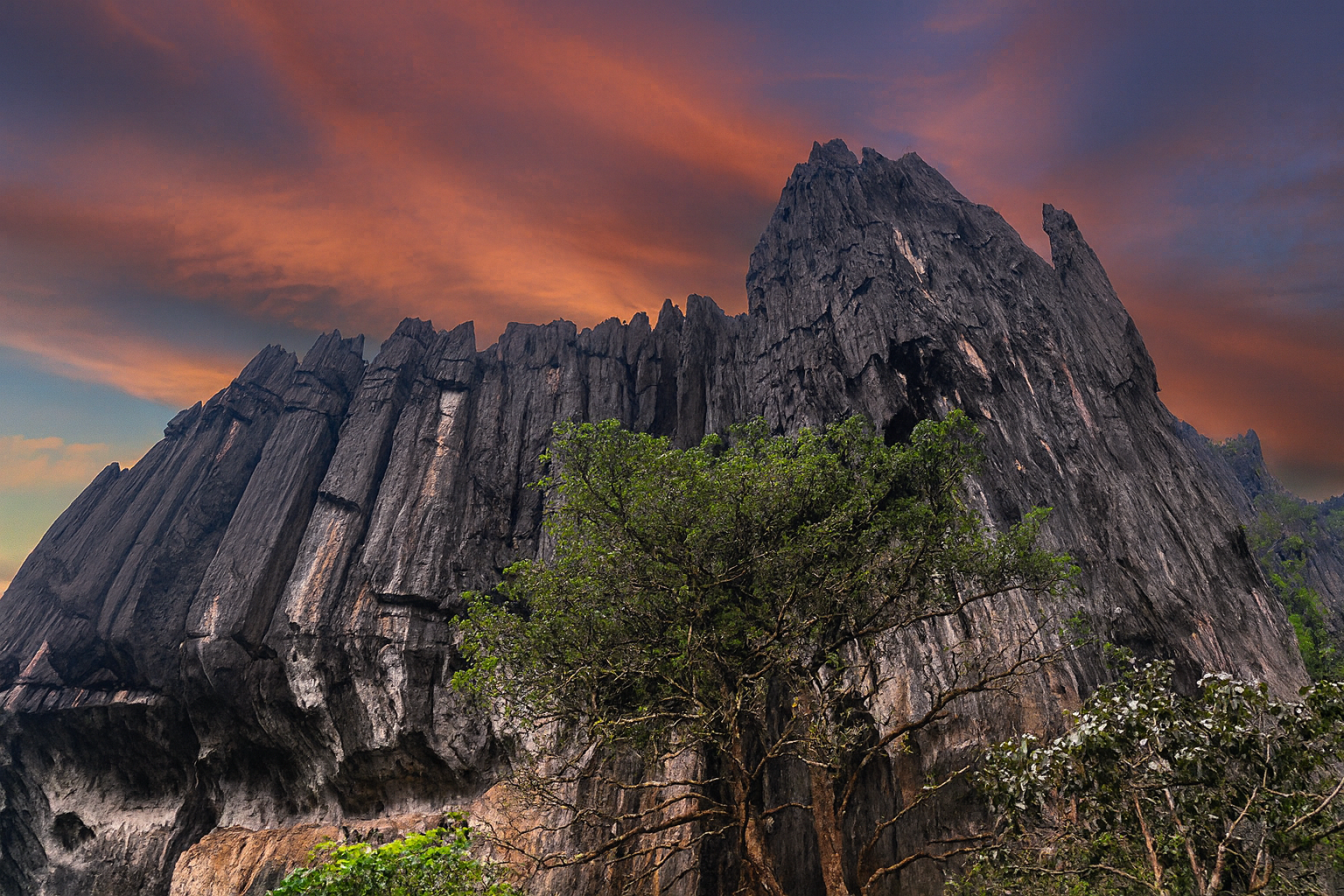
Hidden deep within the lush Western Ghats of Uttara Kannada, Yana Caves stand as a breathtaking fusion of geological wonder and ancient legend. With their black limestone spires piercing the green canopy, these formations seem sculpted by both nature and divinity. Beyond their visual drama, Yana holds stories of gods, demons and miracles – a place where faith and wilderness meet in timeless harmony.
- Located in the Sahyadri (Western Ghats) range of Uttara Kannada, Karnataka.
- Famous for striking black limestone towers and cave temples.
- Visited by trekkers, nature lovers, pilgrims and photographers.
Geology & Early Human Presence
1. Geological Origins
Nestled in the heart of the Western Ghats’ Sahyadri mountain range, the Yana area is characterised by striking black crystalline karst limestone formations. The two most prominent rock monoliths are:
- Bhairaveshwara Shikhara – rising to about 120 metres (≈ 390 ft) above the forest floor.
- Mohini Shikhara – slightly smaller, approximately 90 metres (≈ 300 ft) tall.
The region includes around 60–61 limestone rock structures within roughly 3 km. The blackened appearance of the rocks is natural – a combination of limestone, iron, manganese, silica and long-term weathering in a humid climate gives them a charcoal-like hue.
2. Early History & Human Presence
There are no precise ancient inscriptions dating the origin of the cave temples, but Yana has long been a place of pilgrimage and local worship. The cave under Bhairaveshwara Shikhara houses a swayambhu (self-manifested) Shiva Linga, believed to have emerged naturally rather than being carved.
Water drips from the roof of the cave over this linga, adding to its sanctity. Inside the cave there is also a bronze statue of Chandika, an incarnation of Goddess Durga, reflecting the fusion of Shaiva and Shakti traditions.
Myth & Legend – Bhasmasura and Mohini
A core element of Yana’s cultural identity is its rich mythological story:
- Bhasmasura’s Boon: The demon Bhasmasura pleased Lord Shiva through intense penance. Shiva granted him a frightening boon – anyone whose head Bhasmasura touched would turn to ashes (bhasma).
- Turning on Shiva: Drunk with power, Bhasmasura tried to test this boon on Shiva himself. Shiva fled and sought help from Lord Vishnu.
- Mohini’s Dance: Vishnu appeared as the enchanting Mohini. She challenged Bhasmasura to a dance competition. While dancing, she placed her own hand on her head.
- The Fall of Bhasmasura: Trying to imitate Mohini, Bhasmasura did the same – and his own power destroyed him, turning him to ashes.
Local belief says the intense heat from Bhasmasura’s demise charred the nearby limestone – explaining why the rocks appear dark. Loose, ash-like black soil around the peaks is seen by devotees as traces of this event. The two peaks themselves – Bhairaveshwara Shikhara (for Shiva) and Mohini Shikhara (for Vishnu’s avatar) – preserve the memory of the legend.
Cultural, Religious & Environmental Significance
4. Cultural & Religious Significance
- Cave Temple: The cave temple under Bhairaveshwara Shikhara is a major pilgrimage centre. The swayambhu Shiva Linga, bathed by dripping water (Gangodbhava), is considered highly sacred.
- Chandihole Stream: A small stream, Chandihole, emerges from the cave and joins the Aghanashini River – both ecologically and religiously important.
- Maha Shivaratri: During this festival, Yana attracts large crowds with special rituals, night vigils and devotional singing.
5. Environment & Conservation
Yana lies in the Western Ghats – one of the world’s biodiversity hotspots – with high rainfall, lush forests and rich flora and fauna. Bats, birds and bees use the caves and rock faces as their habitat.
Earlier, access involved trekking through dense, muddy forest paths. Today, roads bring visitors closer, with a short trek remaining part of the experience. With rising tourist numbers, concerns about littering, damage to rock surfaces and disturbance to wildlife have grown. Local efforts focus on cleanliness, conservation and sustainable tourism.
6. Modern Era & Tourism
British surveyors like Francis Buchanan-Hamilton noted Yana in early 19th century geographic accounts. In recent decades, films such as the Kannada movie Nammoora Mandara Hoove showcased Yana’s dramatic cliffs, making it famous as a scenic destination.
Today, Yana is easily combined with visits to Kumta, Sirsi and Gokarna for weekend trips and pilgrimages.
Plan Your Visit & Nearby Attractions
Plan Your Visit
- Location: Yana village, Uttara Kannada district, Karnataka – about 25 km from Kumta, 40 km from Sirsi and ≈ 460 km from Bengaluru.
- By Road: Well connected from Gokarna, Sirsi and Kumta. The last 2–3 km is a short forest walk.
- By Train: Nearest stations – Kumta (≈ 26 km) and Gokarna Road (≈ 31 km).
- By Air: Closest airport – Hubballi (≈ 142 km).
- Best Time: October–February (pleasant weather). Avoid peak monsoon (June–August) due to heavy rain and leeches.
- Temple & Festivals: Bhairaveshwara temple is open daily (timings may vary). Maha Shivaratri (Feb/March) is celebrated with great devotion.
Nearby Attractions
- Vibhooti Falls (≈ 9 km): Multi-tiered waterfall with crystal-clear pools – a favourite picnic spot.
- Mirjan Fort (≈ 25 km): 16th-century laterite fort linked to Queen Chennabhairadevi and coastal trade.
- Gokarna (≈ 45 km): Coastal town known for Om Beach, Mahabaleshwar Temple and a chilled backpacker scene.
- Sirsi (≈ 40 km): Market town famous for Marikamba Temple, arecanut plantations and Yakshagana performances.
- Unchalli Falls (≈ 60 km): Also called Lushington Falls – a dramatic 100+ metre cascade in a deep valley.
Yana Caves are more than a geological marvel – they are a living symbol of faith, myth and the wild beauty of Karnataka. Whether you come as a pilgrim, trekker or nature enthusiast, Yana offers an experience that is felt as much as it is seen.