Introduction – Shastra Linga
Nestled amidst the dense forests and tranquil landscapes of the Western Ghats, the town of Sirsi in Uttara
Kannada is home to many fascinating natural and spiritual sites. Among them, Shastra Linga, located on the
banks of the Shalmala River, stands out as a unique and sacred destination.
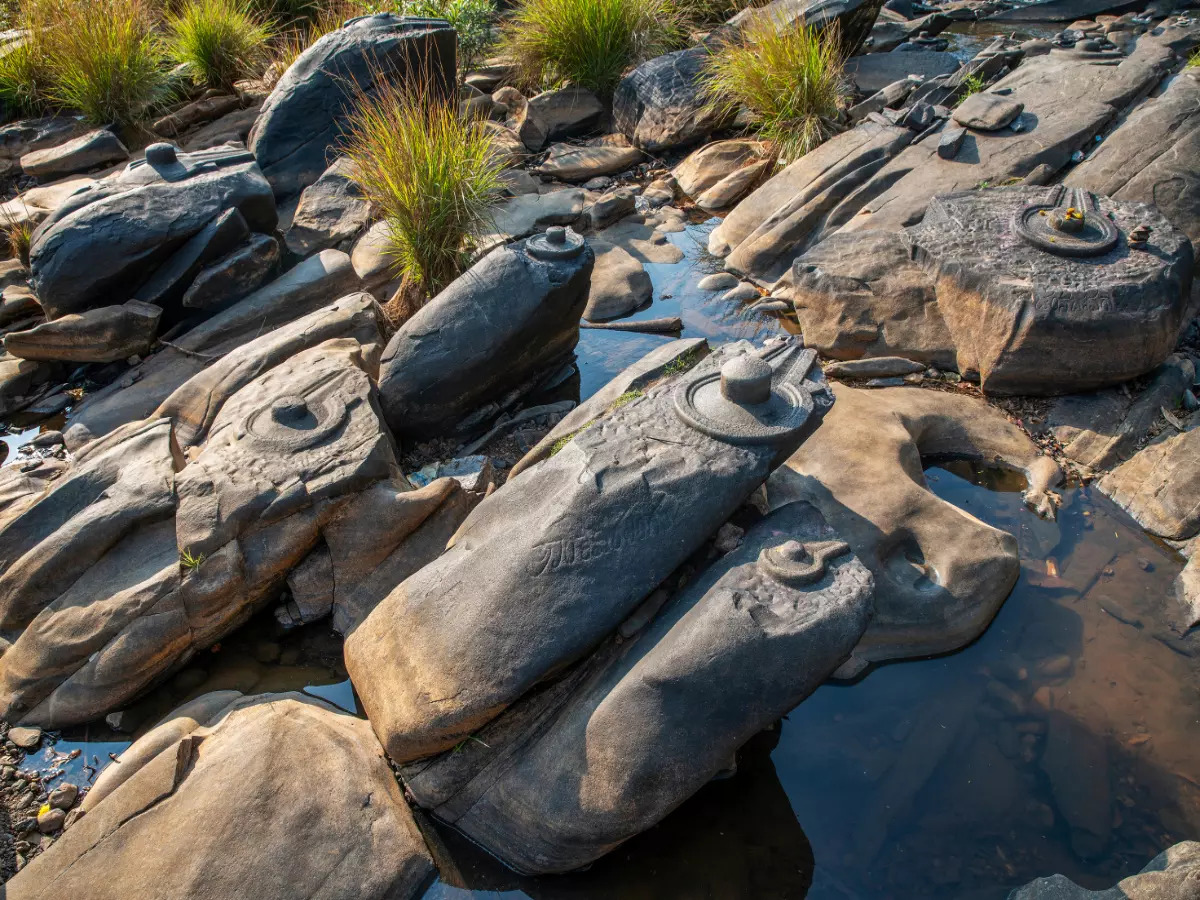
Known for its countless Shiva Lingas carved on naturally occurring rocks along the riverbed, Shastra Linga
attracts devotees, history enthusiasts and nature lovers. It is not just a place of worship but also a
testament to ancient art, devotion and the deep connection between humans and nature.
Historical & Religious Significance
The origin of Shastra Linga dates back several centuries and is deeply rooted in Shaivism, one of the major
traditions of Hinduism dedicated to Lord Shiva. The name comes from “Shastra” (sacred scripture or weapon)
and “Linga” (symbolic representation of Shiva) – together reflecting the power and sacred essence of Shiva
as both protector and destroyer in the cosmic order.
According to local legends, the carvings of Lingas on the stones along the Shalmala River were done by
devotees and hermits over many centuries. Each Shiva Linga represents an offering made by a devotee seeking
blessings. Some carvings are believed to date back to the 8th–12th centuries, during the reign of the
Kadamba dynasty and later the Vijayanagara Empire.
Thousands of small and large Lingas can be seen on rocks submerged in the flowing waters of the Shalmala.
Many have ancient shastras (scriptures) or symbols inscribed on them, making this stretch a living
museum of spiritual art and devotion.
Natural Beauty & Best Time to Visit
Natural Setting
Shastra Linga is surrounded by the lush greenery of the Western Ghats, one of India’s most biodiverse
regions. The Shalmala River, originating near Sirsi, flows through dense forests and rocky terrain before
joining the Bedti River. The section where the Lingas are carved is especially scenic – the river flows
gently over stones, revealing hundreds of Lingas, especially in the post-monsoon season.
The sound of flowing water, chirping birds and sunlight reflecting off the carved stones create an ideal
atmosphere for meditation, reflection and photography. During early mornings and evenings, mist rising from
the river adds to the mystical feel of the place.
Best Time to Visit
-
October – March: Best season. Water level is moderate, and Lingas are clearly visible.
-
Monsoon (June – September): Heavy rains make the river strong and visits difficult or
unsafe, though the forests are at their greenest.
-
Summer (March – May): Warmer, with reduced water flow exposing more carvings, but heat
may be uncomfortable for some.
How to Reach Shastra Linga
Shastra Linga is conveniently accessed from Sirsi, which acts as the main nearby town and base.
-
By Air: Nearest airport – Hubballi Airport, about 110 km from Sirsi. Regular flights
connect Hubballi to Bengaluru, Mumbai and Hyderabad. From Hubballi, taxis and buses are available to
reach Sirsi.
-
By Train: Nearest stations – Talaguppa, Hubballi and Kumta. Hubballi Junction is the
most accessible, with frequent trains from across Karnataka. From these stations, buses and taxis go to
Sirsi.
-
By Road: Sirsi is well connected by road – about 425 km from Bengaluru, 60 km from
Yellapur and 80 km from Kumta. From Sirsi, Shastra Linga is around 17 km away, reachable by taxi, bike
or car on a scenic forest road.
The drive from Sirsi to Shastra Linga passes through thick forest, making the journey as enjoyable as the
destination itself.
Nearby Attractions & Preservation
Nearby Attractions
Sirsi and surroundings offer multiple natural and cultural spots:
-
Marikamba Temple, Sirsi: One of the most famous temples in Uttara Kannada, dedicated to
Goddess Marikamba.
-
Unchalli Falls: Around 35 km from Sirsi, a spectacular waterfall (Lushington Falls) on
the Aghanashini River.
-
Sahasralinga: Another site with thousands of Shiva Lingas carved along a river, often
compared to Shastra Linga.
-
Banavasi: About 25 km from Sirsi – Karnataka’s oldest town with the historic
Madhukeshwara Temple.
-
Yana Caves: Roughly 40 km away – famous black limestone rock formations with religious
significance.
Preservation & Eco-Tourism
Shastra Linga, being both sacred and natural, demands careful preservation. The Karnataka Forest Department
and local communities promote eco-tourism by maintaining cleanliness and guiding visitors to respect the
sanctity of the area.
Tourists are urged not to litter, not to damage carvings and to avoid bathing near the sacred stones.
Protecting this stretch of the Shalmala River helps preserve its spiritual and historical value for future
generations.