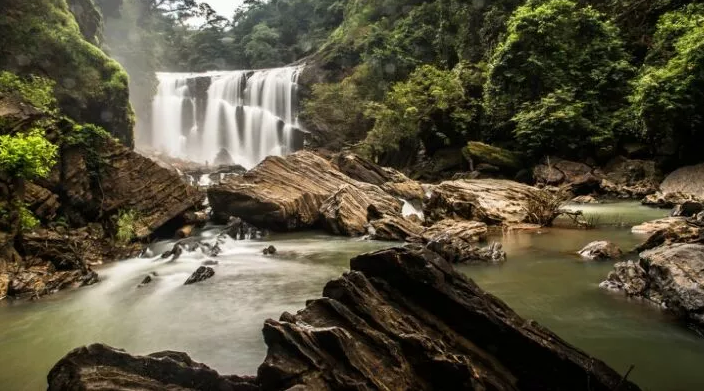
Satodi Falls – Introduction
Nestled deep within the lush green forests of the Western Ghats in Uttara Kannada district of Karnataka,
Satodi Falls stands as one of the most breathtaking natural wonders of southern India. Often called the
“mini Niagara of Uttara Kannada”, this mesmerising waterfall captures the raw beauty of nature, unspoiled
by urbanisation. Located about 25 km from Yellapur and around 85 km from Sirsi, it draws nature lovers,
photographers, trekkers and adventurers from across the country.
- Multi-tiered waterfall surrounded by dense evergreen forest.
- Remote but reachable from Yellapur, Sirsi and Hubballi.
- Ideal for eco-tourism, short treks and peaceful getaways.
History & Origin of Satodi Falls
The history of Satodi Falls is closely linked to the natural history of the Western Ghats – one of the
world’s eight “hottest hotspots” of biodiversity. Unlike man-made tourist spots, Satodi has no royal
construction story; its beauty is purely nature’s craftsmanship.
The waterfall is formed by the backwaters of the Kodsalli Dam, which is built across the Bedti River,
one of the major rivers flowing through this region. Over centuries, the Bedti and its tributaries carved
through rocky terrain and forests, creating a cascading fall about 15–20 metres high in multiple tiers.
The name “Satodi” comes from Kannada words meaning “a place where streams meet”, as several small streams
converge here to form this picturesque waterfall. For nearby villagers, Satodi has long been a place of
tranquillity and abundance, often regarded as sacred and symbolic of purity.
The Karnataka government later recognised its tourism potential and developed basic access routes, aiming
to encourage eco-tourism while preserving the ecological balance.
Geography, Natural Beauty & Best Time
Geography & Natural Beauty
Satodi Falls lies in the evergreen forests of the Western Ghats, surrounded by towering trees, rich
biodiversity and clean, fresh air. Water does not fall in a single vertical drop, but flows over rock
shelves in multiple layers, creating natural pools at the bottom.
During the monsoon season (June–September), the waterfall is at its most powerful and dramatic, with
mist and roaring water echoing through the valley. Even in the post-monsoon months (October–February),
the flow remains steady, offering a safer but still spectacular view.
Best Time to Visit
-
Monsoon (June–September): Falls are at their fullest, but roads can be muddy and the
trek challenging or risky.
-
Post-Monsoon (October–February): Best time for tourism, photography and trekking.
Pleasant weather and good water flow.
-
Summer (March–May): Water levels drop; the area can be warm but still scenic with
calmer pools.
How to Reach & Things To Do
How to Reach Satodi Falls
-
By Air: Nearest airport is Hubballi (≈ 125 km from Yellapur). From there, taxis or buses
can be taken to Yellapur and onwards to Satodi.
-
By Train: Nearest major railway station is Hubballi Junction, connected to Bengaluru,
Goa, Mumbai and more. Kumta or Mundgod stations can also be used depending on the route.
-
By Road: Yellapur is well connected by road from Sirsi (≈ 85 km), Hubballi (≈ 125 km)
and Goa (≈ 150 km). From Yellapur, travellers drive about 25 km on forest roads. The last stretch
(around 4–5 km) can be rough – local jeeps or a short trek are recommended.
The journey itself is an adventure – you pass through dense forest, small streams and scenic valleys, with
many photo opportunities along the way.
Activities & Things To Do
- Trekking & Nature Walks: Short forest trails around the falls are ideal for mini-treks.
- Photography: The multi-layered cascade, mist and greenery are perfect for landscape shots.
- Picnicking: Safe flat areas near the falls are good for relaxed picnics.
- Bird Watching: The region is rich in birdlife, including endemic and migratory species.
Swimming directly under the main fall is not advised during monsoon due to strong currents and slippery rocks.
Nearby Attractions & Preserving Satodi
Nearby Attractions
-
Magod Falls: About 19 km from Yellapur – a massive twin-step waterfall on the Bedti River.
-
Jenukallu Gudda: Hilltop viewpoint near Yellapur offering stunning Western Ghats sunsets.
-
Unchalli (Lushington) Falls: Around 35 km from Sirsi – a spectacular waterfall on the
Aghanashini River.
-
Banavasi: About 50 km from Sirsi – one of Karnataka’s oldest towns, famous for the
ancient Madhukeshwara Temple.
Preserving the Beauty
As Satodi Falls becomes more popular, maintaining its ecological balance is crucial. Visitors are requested:
- > Do not litter – carry back plastic and waste.
- > Respect local customs and wildlife.
- > Avoid loud music and activities that disturb animals and other visitors.
The Karnataka Forest Department and local communities work together to ensure that tourism supports both
nature and local livelihoods. With responsible travel, Satodi Falls can remain a pristine “hidden gem” for
future generations.